
How To Playwright Repeat Login
How To Playwright Repeat Login - Sure, let's get you set up with a shared login session for your @playwright/test tests. Here are the top, common flows. By capturing the authenticated state of a user. Click a button to finalise the login;. For web and applications and apis, you will typically have to run through some interactive authentication flow. We provide the username and password, injected by using environment variables.
In this article we will look at some typical authentication scenarios, explain how using playwright’s storagestate works under the hood and give some best practices when. Here are the top, common flows. We fetch the login page and click the “login with google” button. Playwright has a way to restore the login state so you don't need to repeat these steps for every single test. For web and applications and apis, you will typically have to run through some interactive authentication flow.
To exemplify how storing the sign in works, we. We provide the username and password, injected by using environment variables. For web and applications and apis, you will typically have to run through some interactive authentication flow. This way, you can save the time.
Playwright >> Save authentication state and Login atuomatically & That

We fetch the login page and click the “login with google” button. These saved states can then be reused in tests. Imagine testing a web application where multiple tests require logging in. We are redirect to google. Navigate to the login form;
Playwright UI Mode

By capturing the authenticated state of a user. By default failing tests are not retried. In its simplest form, a login procedure requires the user to: Click a button to finalise the login;. Playwright allows you to save storage states for each user after login.
playwrightrecaptcha 0.5.1 A library for solving reCAPTCHA v2 and v3

It sounds like a common requirement in test automation though. For web and applications and apis, you will typically have to run through some interactive authentication flow. Fill in a password field; To exemplify how storing the sign in works, we. A typescript class that defines a login automation script using playwright.
Playwright >> Save authentication state and Login atuomatically & That

This way, you can save the time. Here are the top, common flows. There not seem to be a mechanism with in playwright to do step level retry when condition is not met. These saved states can then be reused in tests. In this article we will look at some typical authentication scenarios, explain how using playwright’s storagestate works under.
Recording Tests With Playwright Improve & Repeat

For web and applications and apis, you will typically have to run through some interactive authentication flow. Repeating login logic in every test is inefficient and violates the dry (don’t repeat yourself) principle. Here are the top, common flows. It includes locators for the username, password fields, and a login button. This file will handle the authentication and save the.
playwright examples playwright automation testing

To exemplify how storing the sign in works, we. This way, you can save the time. Fill in a username/email field; Here are the top, common flows. This can be particularly useful for identifying flaky tests that may pass or fail intermittently.
Playwright >> Save authentication state and Login atuomatically & That

These saved states can then be reused in tests. Fill in a username/email field; We'll see how to do that right now. This way, you can save the time. Playwright allows you to save storage states for each user after login.
Playwright >> Save authentication state and Login atuomatically & That
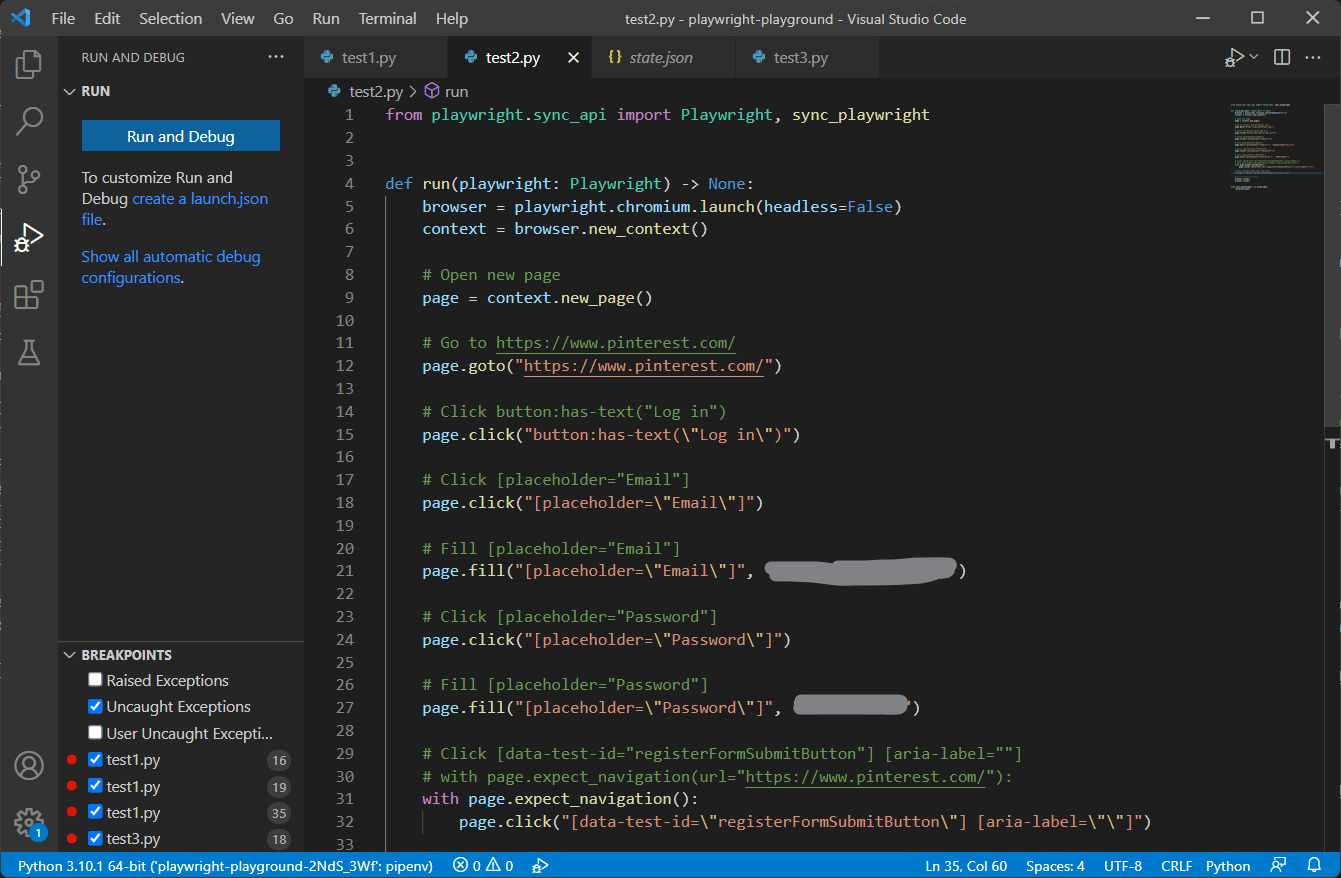
Sure, let's get you set up with a shared login session for your @playwright/test tests. If you want to do it to involve randomness, then we. Playwright apis can extract logged in state (cookies/local storage) from one browser context and load it into another browser context. Playwright allows you to save storage states for each user after login. There not.
How To Playwright Repeat Login - This way, you can save the time. Repeating login logic in every test is inefficient and violates the dry (don’t repeat yourself) principle. We'll see how to do that right now. Playwright has a way to restore the login state so you don't need to repeat these steps for every single test. Imagine testing a web application where multiple tests require logging in. To exemplify how storing the sign in works, we. First, you'll need to create an auth.setup.ts file. When enabled, failing tests will be retried multiple times until they pass, or until the maximum number of retries is reached. It sounds like a common requirement in test automation though. This can be particularly useful for identifying flaky tests that may pass or fail intermittently.
We fetch the login page and click the “login with google” button. When enabled, failing tests will be retried multiple times until they pass, or until the maximum number of retries is reached. This way, you can save the time. We provide the username and password, injected by using environment variables. Imagine testing a web application where multiple tests require logging in.
A Typescript Class That Defines A Login Automation Script Using Playwright.
Learn different approaches to handle authentication in playwright, from basic login sequences to advanced techniques like session storage and api auth. Repeating login logic in every test is inefficient and violates the dry (don’t repeat yourself) principle. Fill in a username/email field; Repeateach is usually a feature designed to spot flakiness inside your test.
So You Can Run A Specific Test Via:
It includes locators for the username, password fields, and a login button. We are redirect to google. Fill in a password field; In its simplest form, a login procedure requires the user to:
By Capturing The Authenticated State Of A User.
For web and applications and apis, you will typically have to run through some interactive authentication flow. We'll see how to do that right now. Playwright has a way to restore the login state so you don't need to repeat these steps for every single test. Sure, let's get you set up with a shared login session for your @playwright/test tests.
We Fetch The Login Page And Click The “Login With Google” Button.
This way, you can save the time. Here are the top, common flows. If you want to do it to involve randomness, then we. The docs for running via command line can be found here.